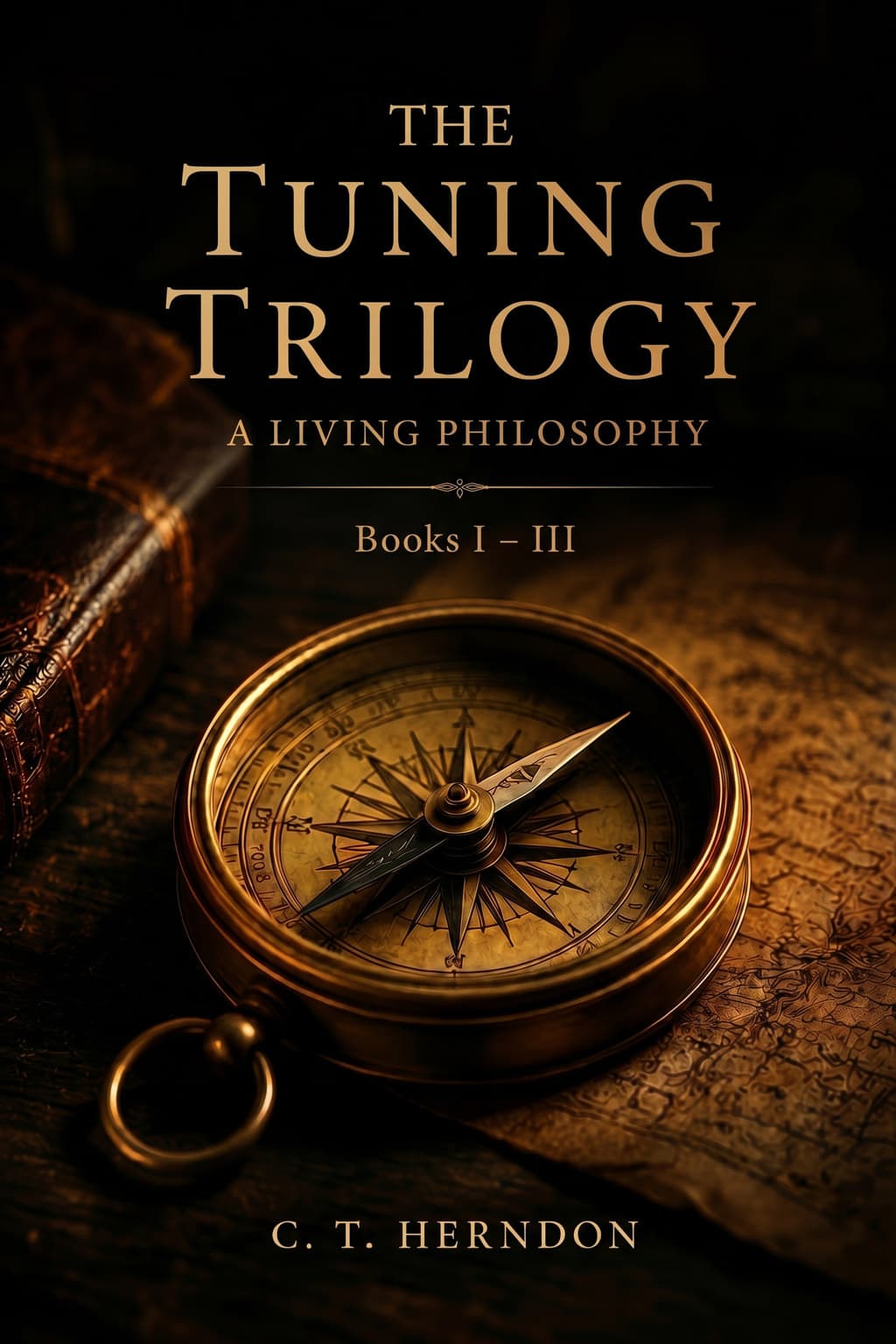
Trilogy I
Tuning
Books 1–3
Four trilogies, twelve volumes, approximately one million words, complete. Each theme is carried from the self to the community to the world, and every volume can be read on its own.
Tuning is the opening movement of the series. It begins with a single human life, widens into the field created between people, and finally asks whether what is formed there can endure beyond the lives that formed it.
Book I begins with Tuning. Echoes of the Unseen asks what must become coherent within a person before leadership can become trustworthy outside them. Resonance begins beneath technique, in the alignment of inner and outer life, and develops through authenticity, resilience, promise, listening, questions, humility, vision, trust, courage, adaptability, and wisdom.
Book II moves into Aligning. The Fields of Belonging takes the tuned individual into community and culture. Here leadership is no longer principally the conduct of one person. It becomes the shaping of conditions: belonging, shared meaning, ritual, covenant, cadence, repair, productive conflict, collective learning, and the wisdom that becomes possible when many voices can remain distinct without becoming divided.
Book III becomes Shaping. The Covenant of the Future extends resonance beyond the present community and into civilization. Story, memory, money, power, repair, the earth, education, technology, and succession become forms of stewardship. Leadership is tested by whether meaning can survive the leader, whether promises can travel farther than the people who made them, and whether those not yet born are treated as participants in decisions made today.
The trilogy therefore traces one continuous enlargement: a life learns to sound true; a people learns to sound together; a civilization learns to carry the music forward. Resonance begins as personal coherence, becomes culture, and ultimately becomes covenant across time.
The governing question
How does a life become coherent enough to create a field in which others can belong, and how does that shared field become a promise strong enough to outlive the people who created it?
The three-book arc
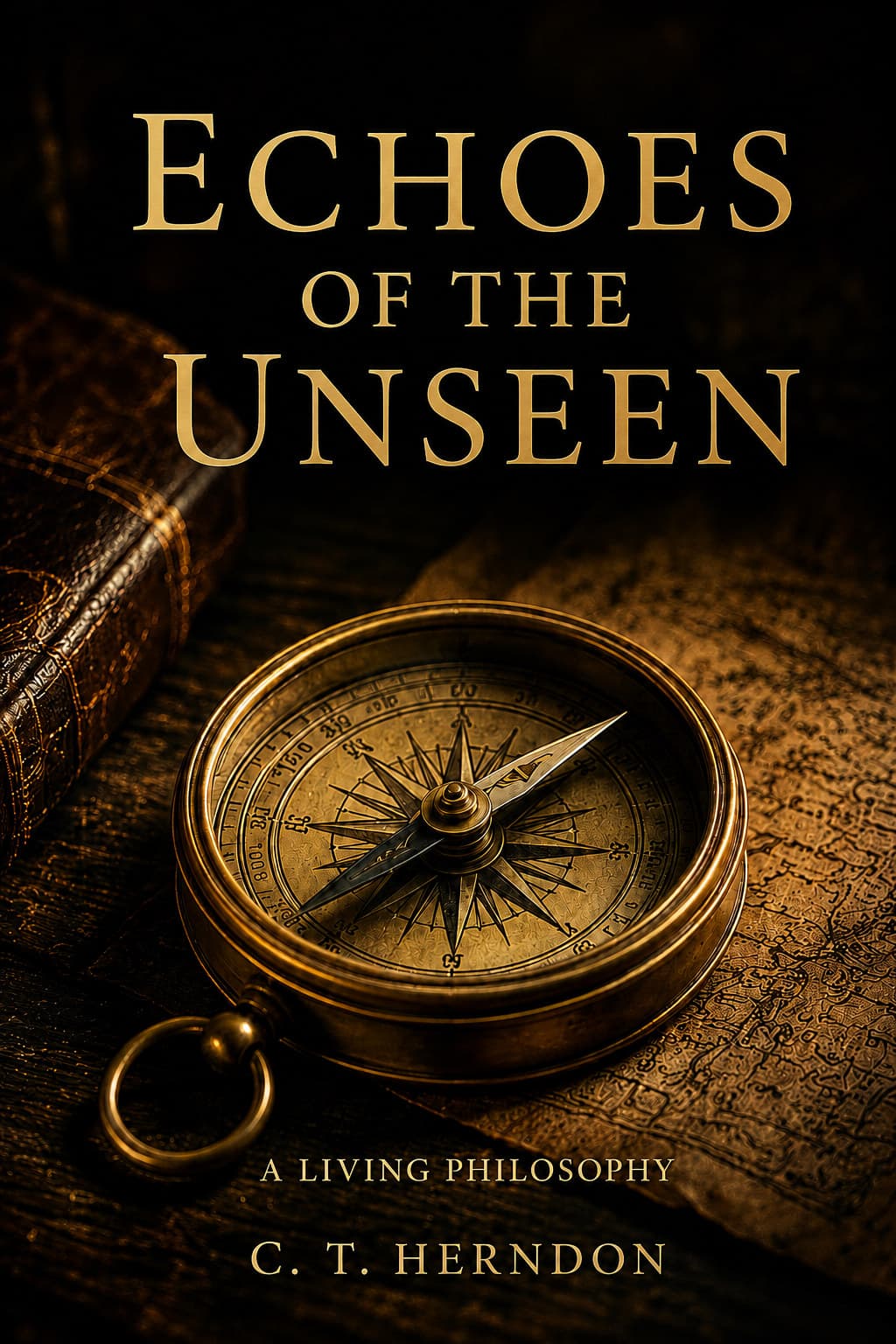
I · Tuning
Echoes of the Unseen
The first work is inward. Before a person can meaningfully shape a room, the instrument doing the shaping must itself be brought into alignment. Authenticity and resilience provide the compass; the remaining movements teach the leader how that orientation becomes lived character.
Read Book 1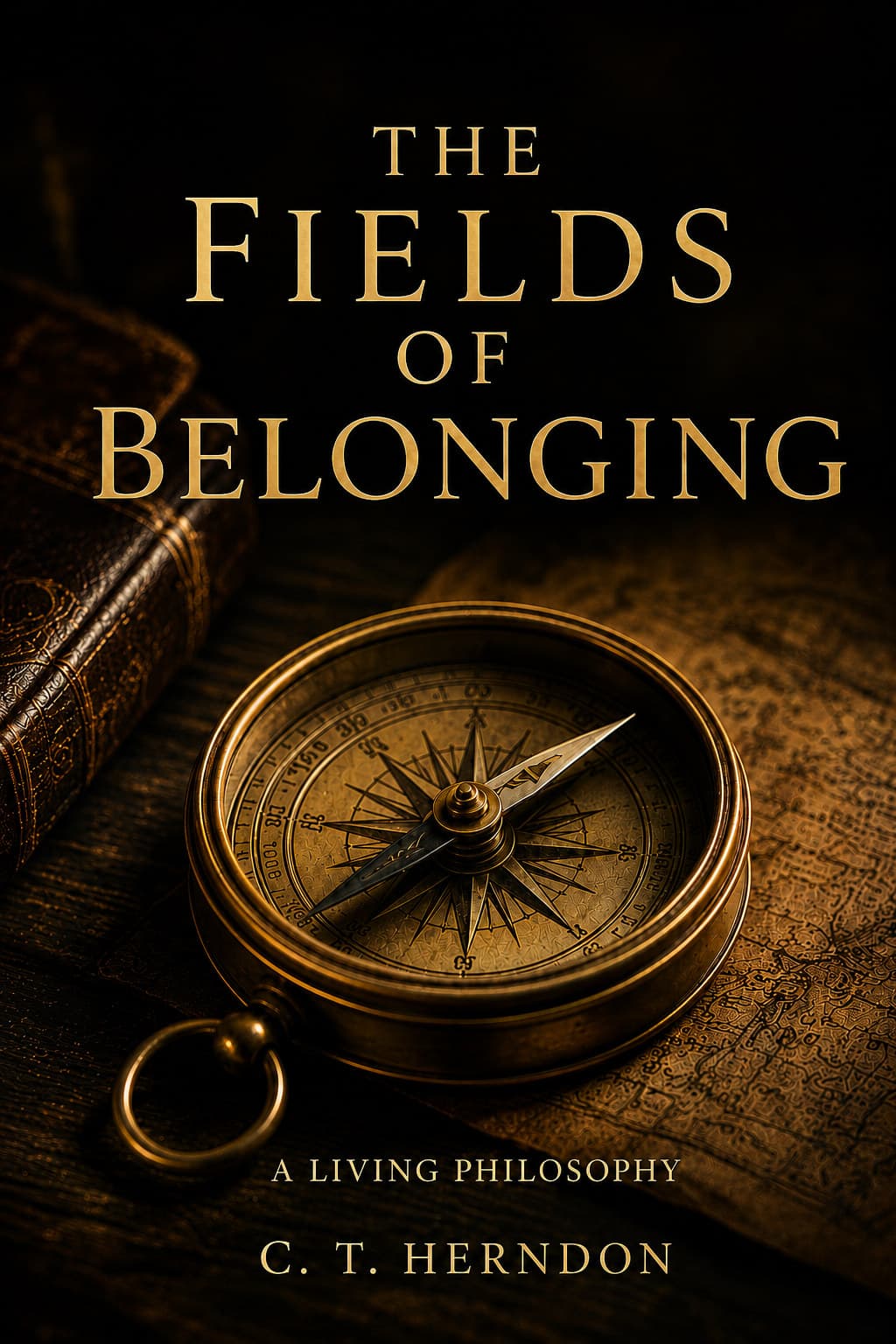
II · Aligning
The Fields of Belonging
The second work is relational and communal. A tuned instrument alone does not make music. The leader must learn to shape a field in which many people can belong, disagree, learn, recover, create, and carry responsibility together.
Read Book 2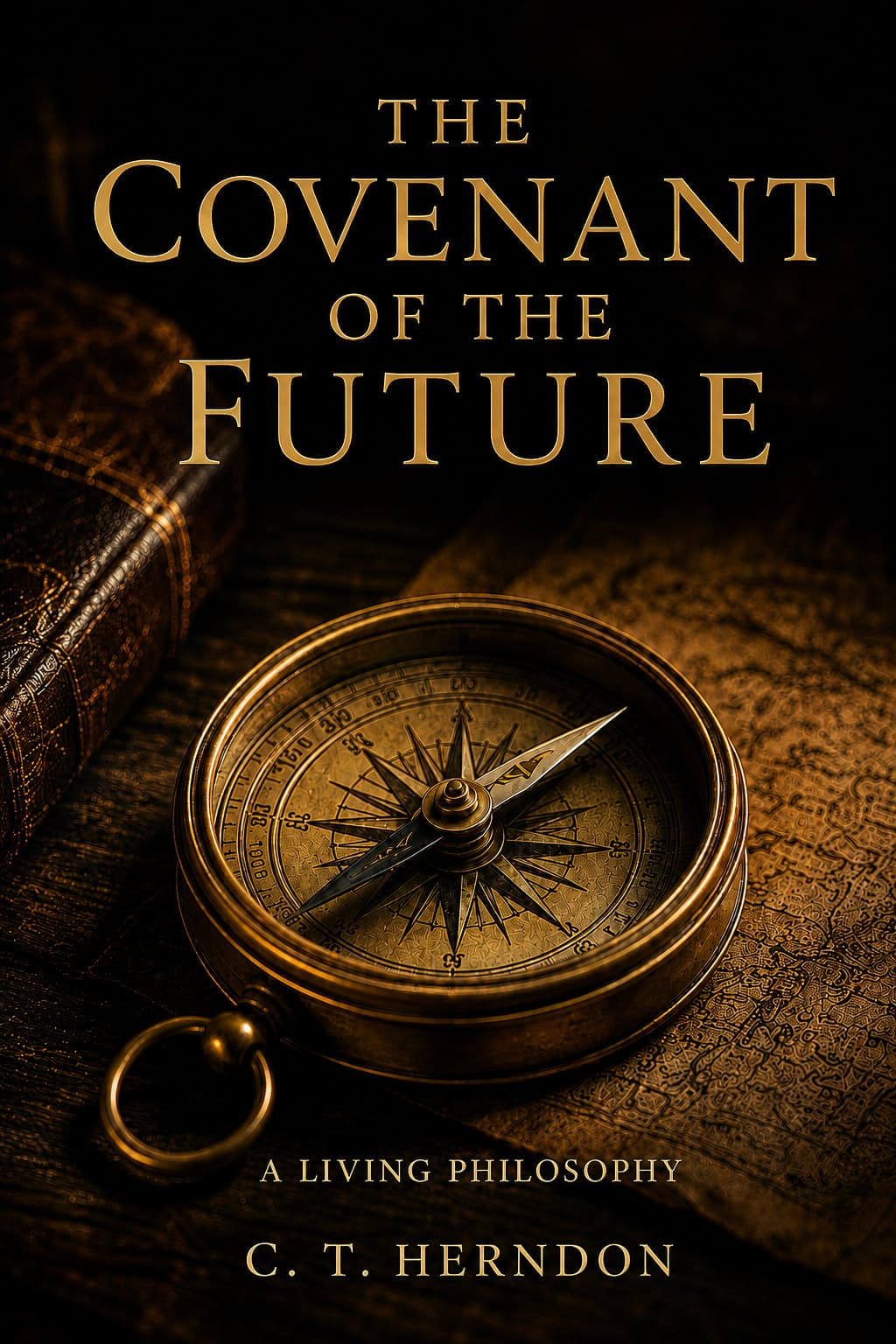
III · Shaping
The Covenant of the Future
The third work is generational. A healthy culture is still incomplete if its meaning dies with its current members. Resonance matures into covenant when memory, institutions, power, knowledge, resources, and responsibility are shaped so that others can inherit rather than merely remember.
Read Book 3From the trilogy
Verbatim“The time has come to set down this third book of the trilogy. The movements have done what they could. They have lifted the themes that matter and returned them from different angles until the ear could recognize them wherever they appeared. They have shown how a solitary life finds its pitch by honoring a larger sound. They have shown how a shared life keeps time by tending small instruments with care. They have shown how a promise can reach beyond us by relying on the hands that are not here yet and by making space for those hands to work.”
“The trilogy ends, but the work does not. A reader who closes this book and returns to a room where decisions are made carries something that was not there before. Perhaps it is only a phrase that lingers, a question that will not settle, an image of a bell or a ledger or a star. Perhaps it is a resolve to slow down before the next vote, to write reasons where they can be read, to open a window when the air grows stale. Perhaps it is a willingness to ask who is not in the room and what they would say if they were. These are small shifts. They are also the way cultures change, one room at a time, one choice at a time, one kept promise at a time.”
“But the symphony continues. The conclusion of this work is not silence. It is invitation. It is a call to those who read to take up their place in the covenant of time, to lead with memory and foresight, to live with resilience and reverence, to carry stories and symbols across the wilderness of forgetting. The music will only endure if each generation consents to play. The instruments are waiting. The score is legible. The room is quiet enough to hear.”
“And so the vow is spoken, not as decree but as offering:”
“To the unborn, we give our fidelity.”
“To the living, we give our courage.”
The Tuning Trilogy